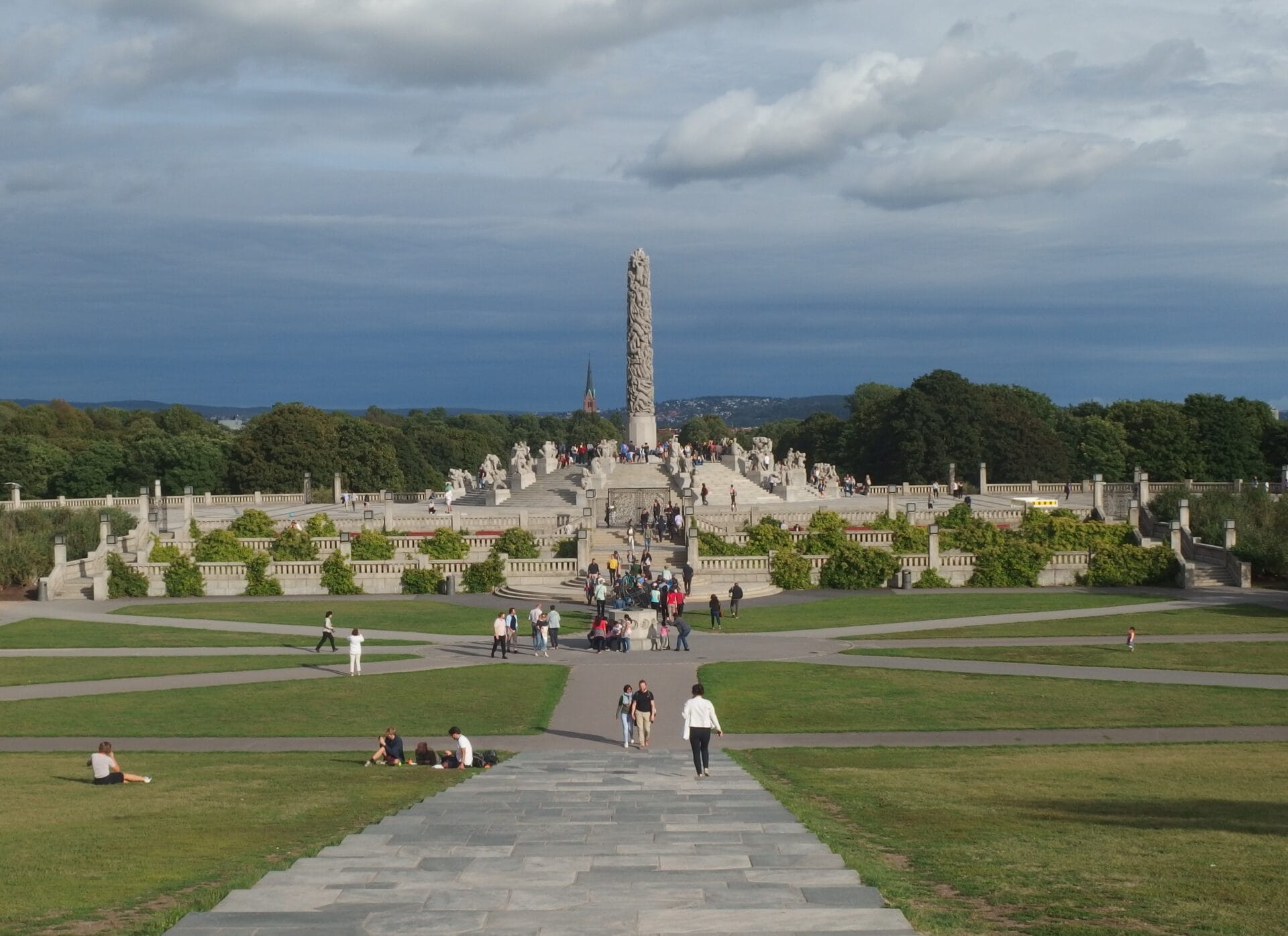
 Photo: Palickap / CC-BY-SA-4.0The Vigeland installation is the core of Frogner Park, the world’s largest sculpture ensemble by a single artist, Gustav Vigeland. It contains 200+ sculptures and numerous reliefs in bronze, granite, and wrought iron, created mainly from the 1910s to early 1940s. The layout follows a central axis:
-
- Main Gate: monumental wrought-iron gates and railings designed by Vigeland.
- The Bridge: 58 bronze figures depicting everyday human interactions; includes the famous “Angry Boy” (Sinnataggen).
- The Fountain: a large bronze basin borne by six giants, surrounded by bronze “tree groups” symbolizing stages of life; extensive reliefs on the surrounding basins.
- The Monolith Plateau: 36 granite figure groups and the Monolith—14.12 m tall, carved from a single granite block with 121 intertwined figures, symbolizing humanity’s struggle and ascent.
- The Wheel of Life: a circular bronze with intertwined figures, representing eternity and the cycle of life.
Address: Frogner ParkZip: Oslo City: 0268Phone: +47 23 49 37 00E-mail: postmottak.vigeland@kul.oslo.kommune.no-
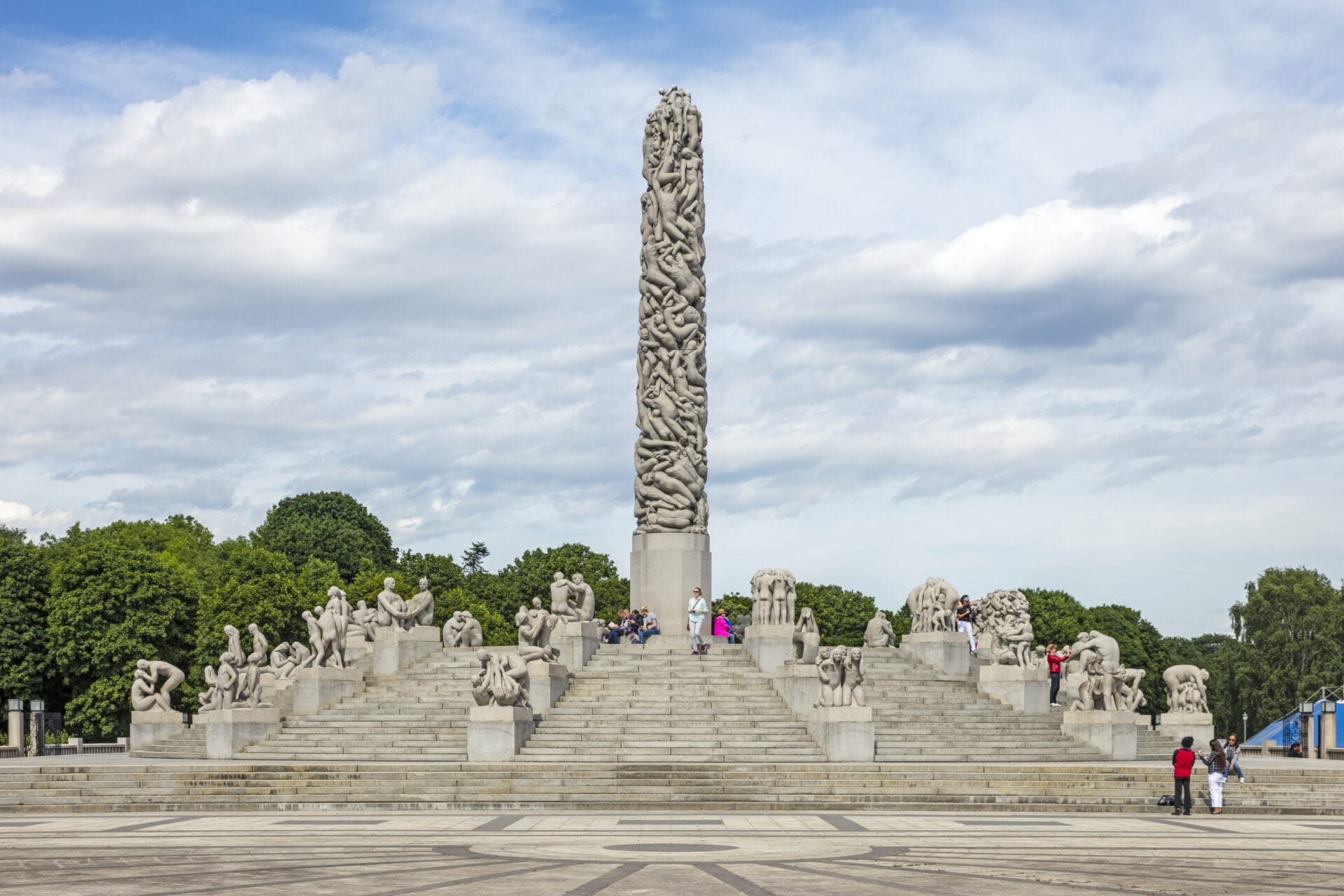 Photo: Andrew Shiva / CC BY-SA 4.0The Monolith is the central sculpture in Vigeland Park (Frogner Park) in Oslo, Norway, created by the artist Gustav Vigeland. Carved from a single block of granite, it stands 14.12 meters high and is composed of 121 intertwined human figures. The sculpture represents the cycle of life, human struggle, and mankind’s spiritual aspirations. Work on the Monolith began in 1924 and it was completed in 1944 after many years of carving and preparation. Today, it is considered one of Norway’s most famous sculptures and a major attraction in Oslo.Area: Frognerparken
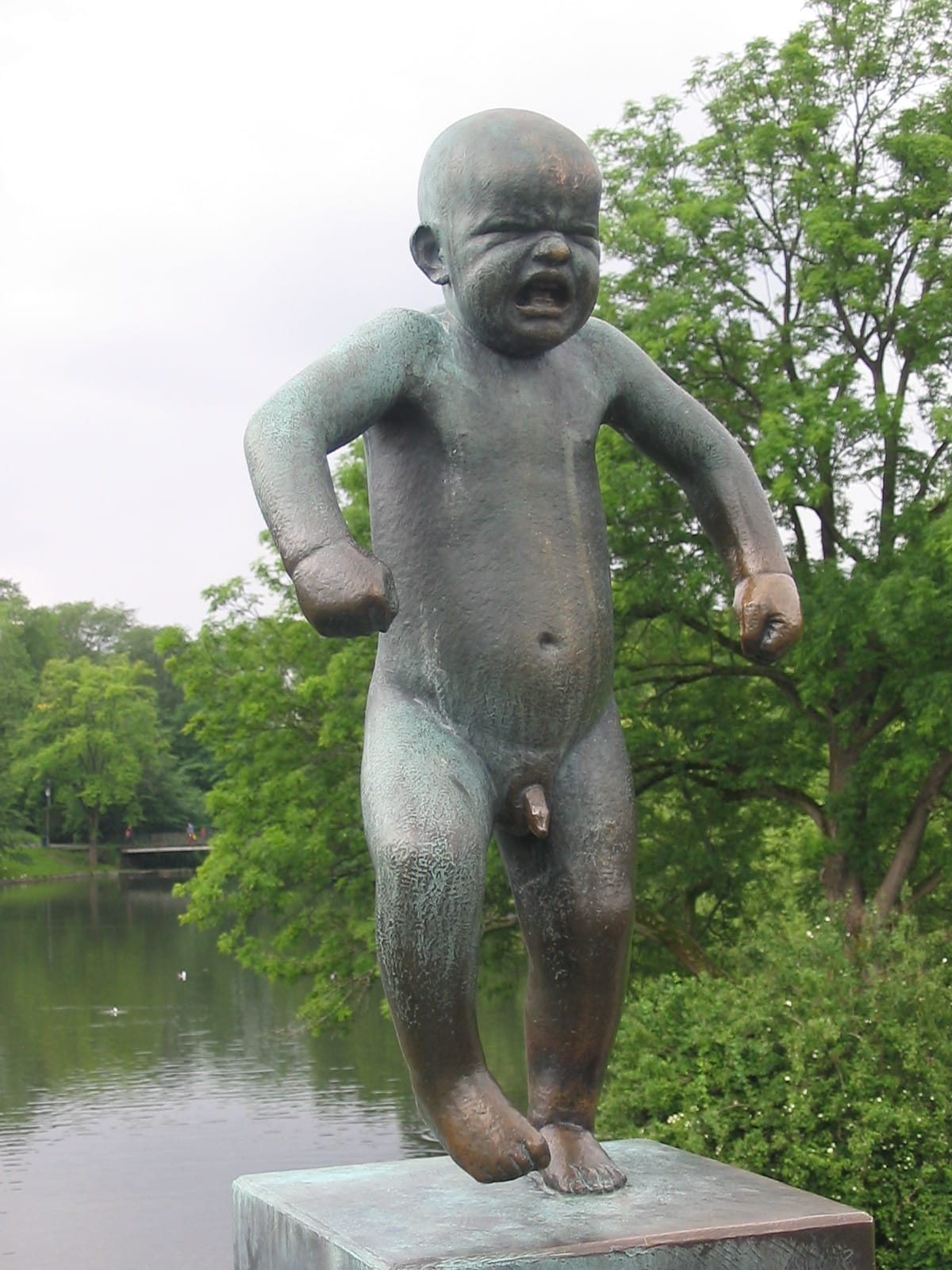 Photo: Olivier2000 / CC-BY-SA-1.0The Angry Boy, known in Norwegian as Sinnataggen, is one of the most famous sculptures in Vigeland Park in Oslo, Norway. Created by the sculptor Gustav Vigeland in the 1920s, it depicts a small, naked boy in the middle of a tantrum, stamping his foot in anger. Despite its modest size, the statue has become one of the park’s most beloved and iconic figures, often symbolizing human emotion in its rawest form. Visitors are drawn to its expressive detail and playful character, making it one of the most photographed sculptures in Norway.Area: Frognerparken
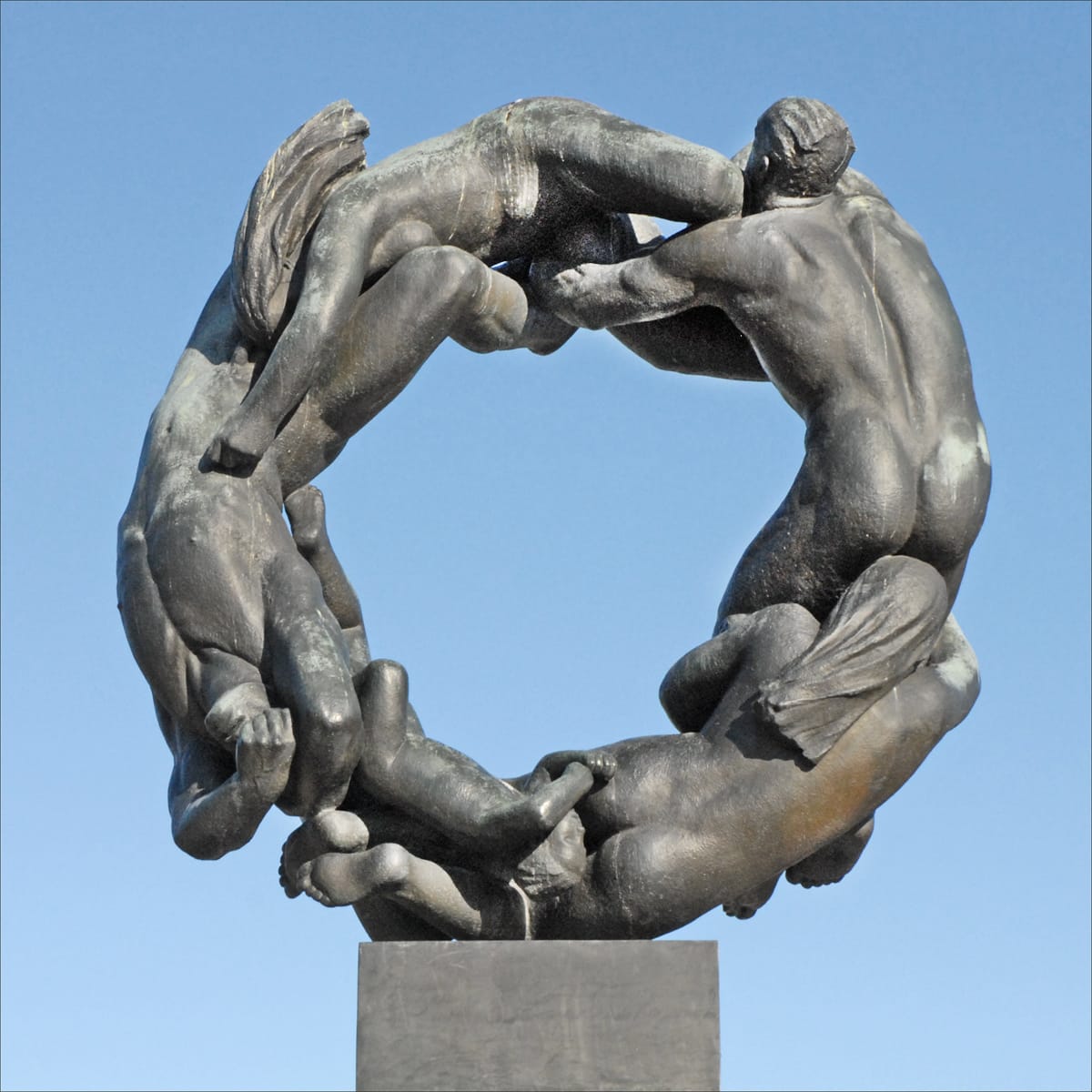 Photo: Jean-Pierre Dalbéra / CC BY 2.0Gustav Vigeland’s The Wheel of Life (Livshjulet) is a striking sculpture that captures the cyclical nature of human existence. The piece portrays figures intertwined in a continuous, circular motion, symbolizing birth, growth, struggle, and death as inevitable stages of life. Vigeland’s emphasis on human emotion and physicality highlights both the beauty and the tension inherent in our shared experiences. Through its dynamic composition, The Wheel of Life invites viewers to reflect on the interconnectedness of individuals and the perpetual flow of life.Area: Frognerparken