 Photo: Steinar Midtskogen / CC BY-SA 3.0
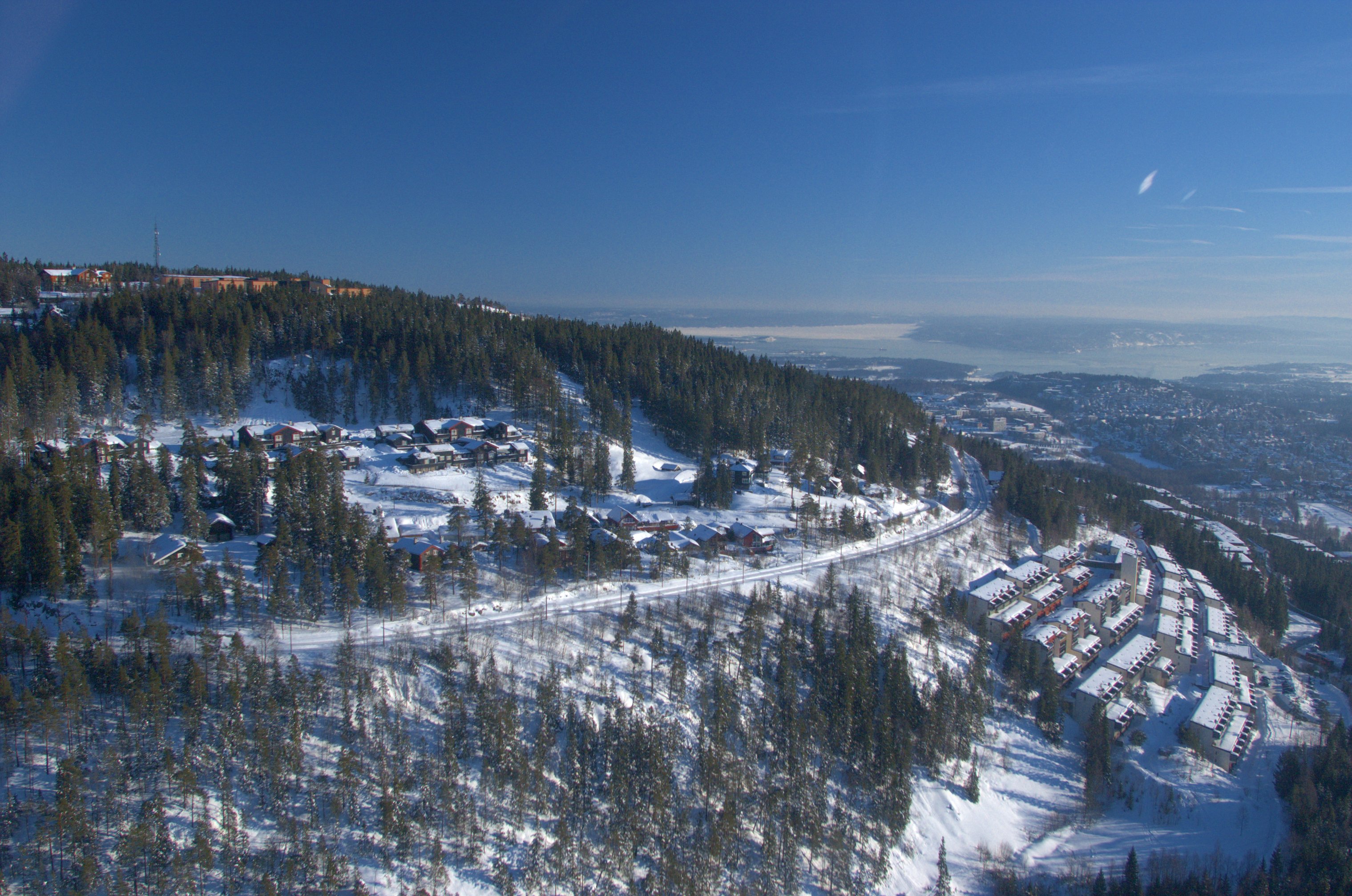
Voksenåsen is a prominent hill and residential area in the Vestre Aker district of Oslo, Norway, reaching an elevation of 501 meters above sea level. Historically, the area was part of the vast Voksen farm and remained largely untouched forest until the late 19th and early 20th centuries, when it became a popular destination for recreation and sanatoriums due to its fresh air and panoramic views. Today, the area is characterized by its high-altitude location bordering the Nordmarka forest, making it a key starting point for hiking and skiing trails. It is served by the Holmenkollen Line of the Oslo Metro, with Voksenåsen station being one of the highest stops on the network.
The area is perhaps best known for housing several significant institutions, most notably the Voksenåsen Culture and Conference Center, which was Norway's national gift to Sweden after World War II. It is also home to the SHAPE (Supreme Headquarters Allied Powers Europe) facility, a former military command center for NATO's Northern Flank, which is built deep into the mountain. Architecturally, Voksenåsen features a mix of traditional wooden villas and modern residences, all positioned to take advantage of the spectacular views over the Oslo Fjord and the city. The combination of historical significance, strategic military importance, and its role as a gateway to nature makes Voksenåsen one of the most unique and prestigious areas in Oslo.
Area: Vestre Aker
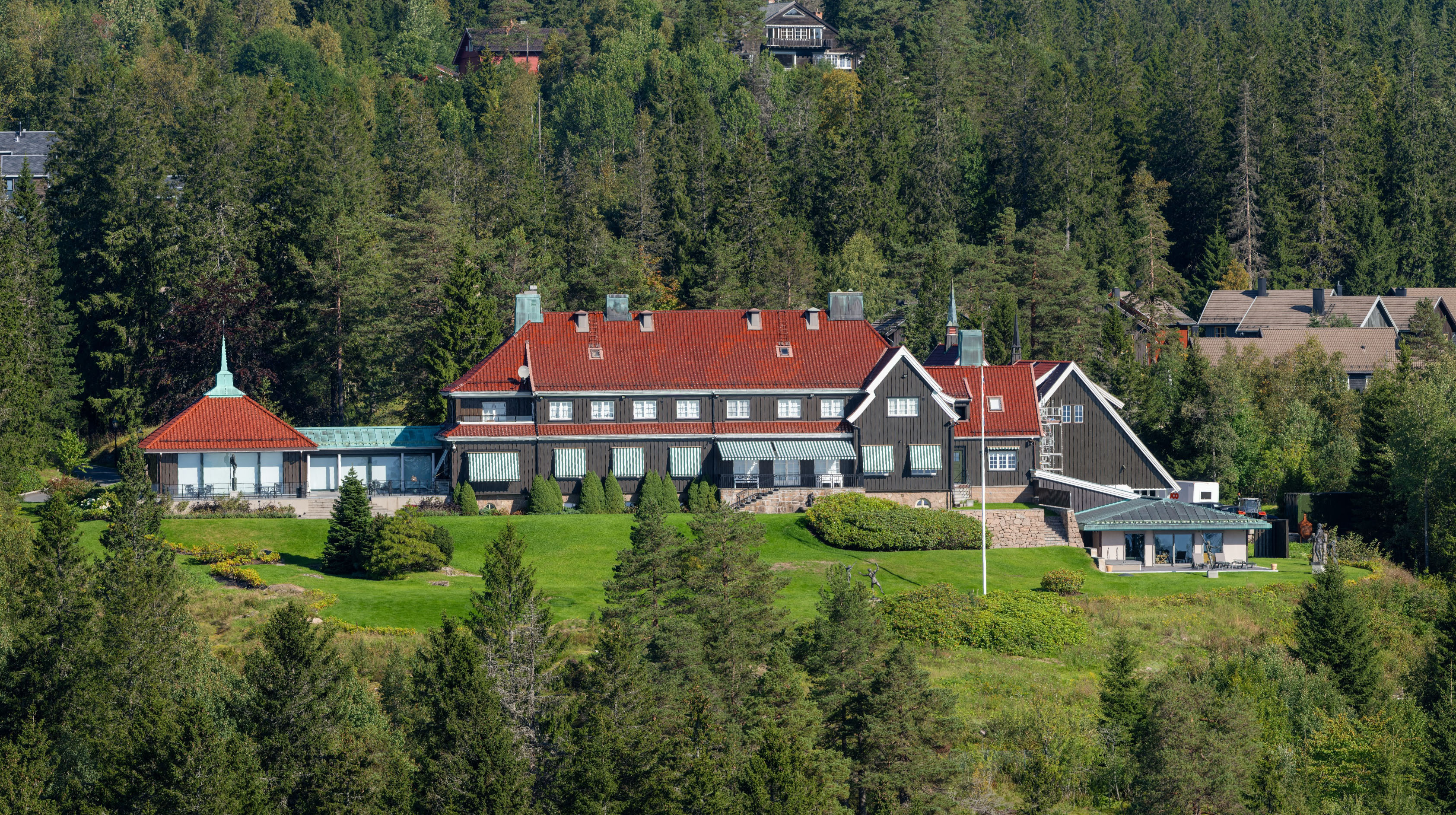 Photo: Holmenkollen360.comVilla Voksenhus is a magnificent and historic estate located at Voksenkollveien 14A, high up on Voksenåsen in the Vestre Aker district of Oslo. Completed in 1920, this towering masonry villa was designed by the renowned architect Carl Berner, a central figure in Norwegian architectural history. The building is a prime example of the National Neo-Baroque style, an architectural movement characterized by its weight, solidity, and classical proportions, which perfectly complement the steep, forested landscape and its sweeping views of the capital. The villa was originally custom-built as a private residence for the prominent industrialist Peter Mathias Bretanus Røwde, best known as the founder of Askim Gummivarefabrik—the company that made Viking rubber boots and tires a household name in Norway. Røwde spent the remainder of his life in this grand home, leaving a lasting mark on the property. In modern times, Villa Voksenhus is perhaps most closely associated with the Norwegian billionaire and businessman Stein Erik Hagen, who purchased the estate in 1992. Over the years, Hagen has invested significant resources into renovating, expanding, and modernizing both the main house and the massive surrounding parklands, adding extensive security systems and private spa facilities while carefully preserving the site's historical and architectural integrity. Today, the estate stands as one of Oslo's most exclusive and spectacular private residences, serving as an impressive landmark that bridges a century of Norwegian industrial and financial history.Address: Voksenkollveien 14Zip: 0790 City: Oslo
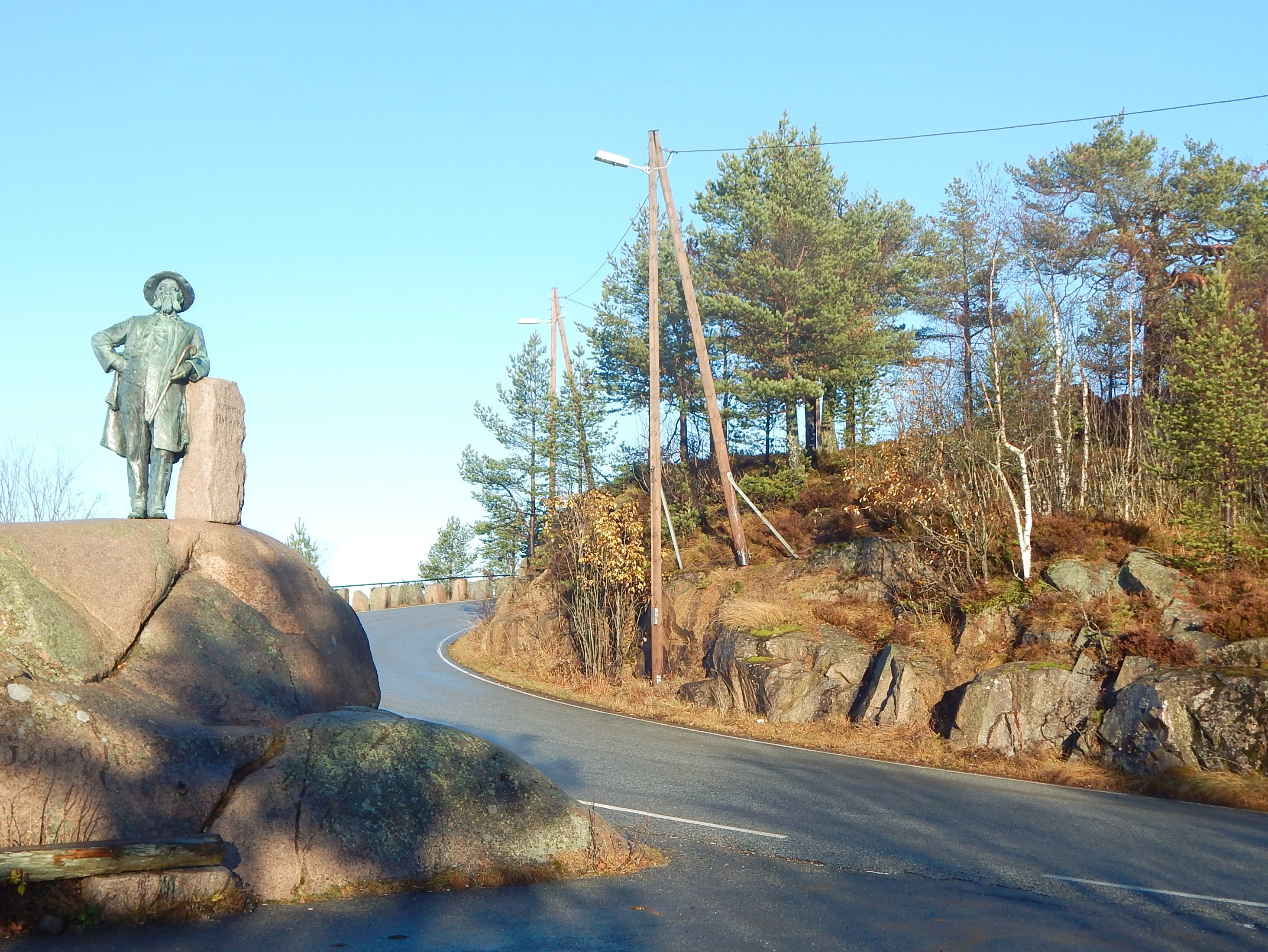 Photo: Jan-Tore Egge / CC BY-SA 4.0Kragstøtten is a prominent bronze monument and a renowned scenic viewpoint situated along Voksenkollveien in Oslo, dedicated to the influential Director General of Public Roads, Hans Hagerup Krag. Erected in 1909 and crafted by the Norwegian sculptor Gustav Lærum, the statue honors Krag's visionary engineering work in the late nineteenth century. During his long tenure, he was the primary driving force behind the construction of the intricate road networks leading up to Holmenkollen and Voksenkollen. These infrastructure projects were highly significant because they opened up the surrounding Oslomarka forests, making the area accessible for public recreation, winter sports, and outdoor activities. The statue itself depicts Krag standing in a characteristic, thoughtful pose, gazing southward over the sweeping panoramic view of the city and the Oslofjord, which is the very landscape his life's work helped the public reach. Today, the area around the monument remains a highly popular destination for tourists, cyclists, and hikers who want to appreciate both the spectacular scenery and the historical legacy of the man often considered Norway's greatest road builder.Address: VoksenkollveienZip: 0790 City: OsloArea: Voksenåsen
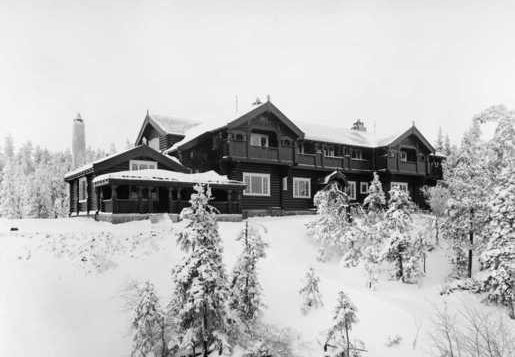 Photo: Anders Beer Wilse - Oslo Museum / CC BY-SA 4.0The Royal Lodge, also known as The Royal Villa or Kongsseteren, is a privately owned residence of the Norwegian royal family situated in the scenic Holmenkollen area of Oslo. Originally financed through a public fundraising campaign, the magnificent timber estate was presented as a generous coronation gift from the Norwegian people to King Haakon VII and Queen Maud in 1906, although its construction was not fully completed until 1911. The lodge was designed by architect Kristian Hjalmar Biong, who won the architectural competition with a project titled "Slot over Slot." His design is a unique architectural masterpiece that blends Neo-Baroque and Art Nouveau styles with traditional Norwegian stabbur and log-building elements, particularly noticeable in the corners of the building. The exterior is further distinguished by symmetrical, brightly colored plant ornamentation inspired by 18th-century Norwegian wood carving. Today, the Royal Lodge serves primarily as a winter retreat where the royal family traditionally gathers to celebrate Christmas and stays during the annual Holmenkollen Ski Festival. The estate also holds a significant and poignant place in modern Norwegian history, as King Olav V, who frequently resided at the lodge, passed away there on January 17, 1991.Address: VoksenkollveienZip: 0790 City: Oslo
 Photo: Unknown / Public Domain
The Voksenkoll accident was a tragic plane crash that occurred on December 18, 1945, when a Canadian military Douglas C-47 Skytrain (Dakota) flew into the southern slope of Voksenkollen in Oslo. The aircraft was en route from England via Copenhagen to Fornebu Airport, but due to thick fog and poor visibility, it was diverted toward Gardermoen. During the flight, the plane experienced severe icing on its wings caused by supercooled rain, which significantly reduced its lift and prevented the pilots from gaining enough altitude to clear the ridge. The aircraft eventually struck the hillside and caught fire near the ruins of the former Anne Kure's Hotel.
Out of the 19 people on board, a total of 17 lost their lives; 15 died instantly at the scene, while two others succumbed to their injuries in the hospital. Among the casualties were two Norwegians: the well-known resistance fighter Hjalmar Steenstrup and naval lieutenant Inge Johansen. Rescue efforts were severely hampered by heavy snow and icy road conditions, which significantly delayed the arrival of the fire department and emergency services. Most of the fallen soldiers are today buried at the war grave section of Vestre Cemetery (Vestre gravlund) in Oslo.
Address: Voksenkollen
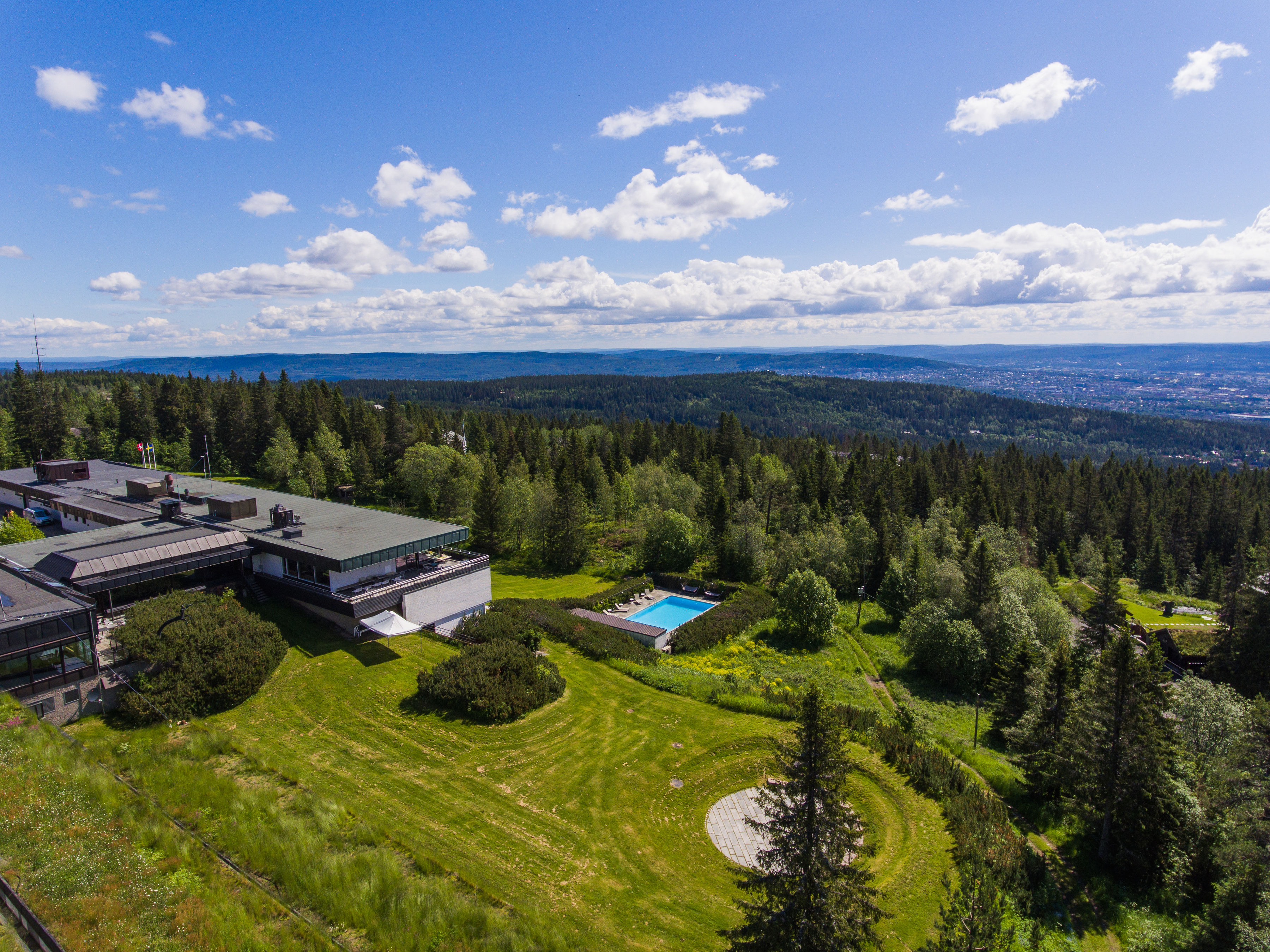 Photo: NordestHM / CC BY-SA 4.0
Voksenåsen is a distinctive hotel, conference center, and cultural hub located at the top of the Vestre Aker district in Oslo, Norway. It is situated 501 meters above sea level, offering a panoramic view of the city and the Oslo Fjord. The property was a gift from the Norwegian state to Sweden in 1955, as a gesture of gratitude for the humanitarian aid Sweden provided to Norway during World War II. Since its official opening by King Olav V and King Gustaf VI Adolf in 1960, the center has functioned as a "National Gift" dedicated to strengthening the social and cultural ties between Norway and Sweden.
The architecture of Voksenåsen is noted for its modernist style, designed by the Swedish architects Hans-Erland Heineman and Jonas Örn. The building is integrated into the steep terrain of the hillside and is characterized by its use of natural materials like wood and stone, reflecting Scandinavian design traditions. Today, Voksenåsen operates as a high-end hotel and a venue for bilateral seminars, art exhibitions, and musical masterclasses. It is owned by the Swedish Ministry of Culture and managed as a non-profit foundation, continuing its mission to foster Nordic cooperation and dialogue through a diverse program of cultural and educational events.